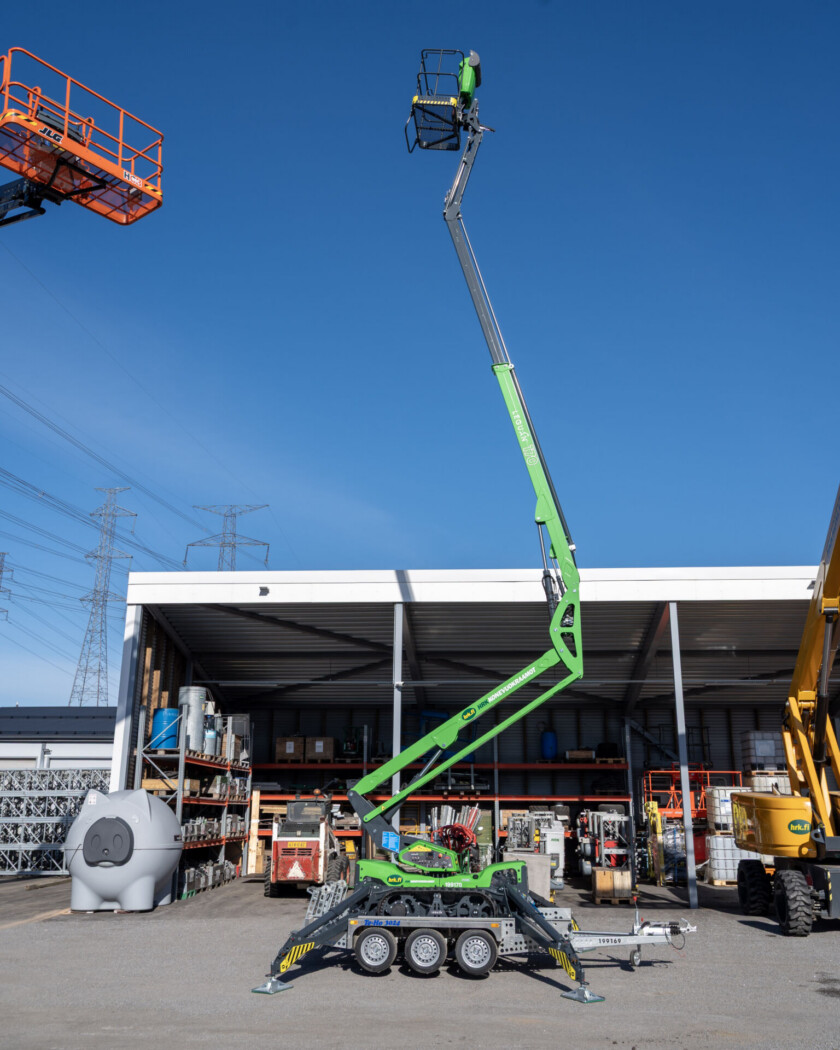
Leguan has delivered the world’s first Leguan 170 lift, equipped with HRK serial number 199170, to HRK-Konevuokraamot Oy on March 11, 2026.
HRK-Konevuokraamot Oy is a Finnish equipment rental company founded in 1975. It offers customers technically advanced, safe, and the most suitable equipment for each job. HRK currently rents construction machines, scaffolding and support equipment, and personnel lifts from seven locations in Finland: Vantaa, Lahti, Turku, Hämeenlinna, and in the Pirkanmaa area in Lempäälä, Pirkkala, and Kangasala.
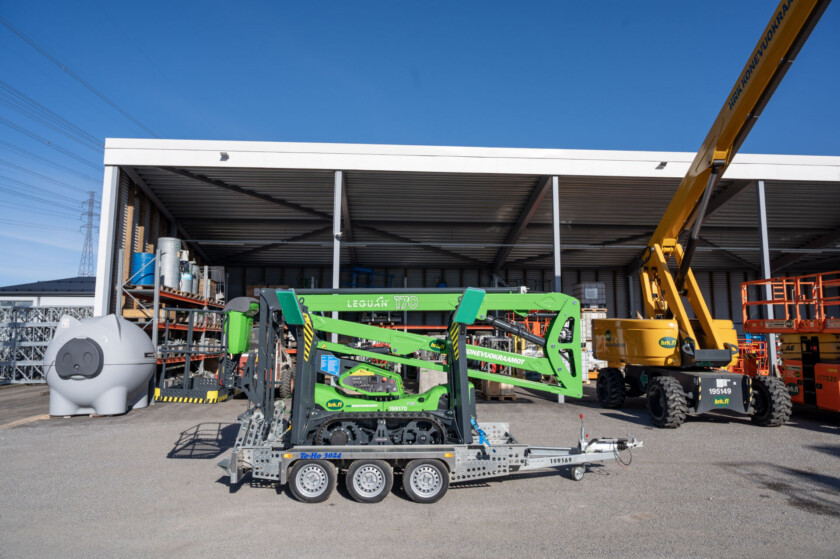
The Latest Addition to the All-terrain Model Series
Leguan 170 model complements the advanced and fully unified All-terrain series, introducing a new entry-level model to the premium Leguan technology lineup. The model provides a cost-effective way to access Leguan’s top features, making it an attractive choice for rental companies, contractors, and users seeking professional performance without needing a larger machine.
Positive Feedback and Reliability Drive Investment
HRK has trusted Finnish-made Leguan Lifts for over 20 years. Leguan has proven to be an excellent partner thanks to its reliability, ease of use, and comprehensive support.
- The latest investment was easy to justify, as we already had other lifts from the All-terrain series in our rental fleet. With the launch of the new model, it was natural to add the 170 to our rental fleet, says HRK’s Head of purchasing, Jussi Seppälä.
Ease of use is crucial in rental operations, and customer satisfaction plays a significant role in building long-term relationships.
- It’s not easy to get feedback from Finns, and its absence is usually a good sign. However, we have also received positive feedback from Leguan users, which shows our customers genuinely appreciate these lifts, Seppälä continues.
Unified Model Range Makes Maintenance Easier
One of Leguan’s strengths is its fully unified model range—All-terrain series lifts use many of the same components. This not only makes it easier for operators to switch between models, but it also means maintenance staff have more straightforward training, as technicians no longer need to learn every model individually.